THE COPYRIGHT OF ALL THE PHOTOGRAPHS IS WITH THE AUTHOR
How do people spend their time? What do they do all day? Do they do the same thing again and again, or do they move in and out of varying intensities of interaction with each other? Is there symmetry in nature; a dance of familiarity that we can rely on in this unpredictable world?
Growing up, these questions baffled me. The fleeting and random nature of the world often made me feel anchorless and adrift. I struggled to make sense of why people behaved the way they did; I despaired at the arbitrariness and invisible rules of interacting in society.
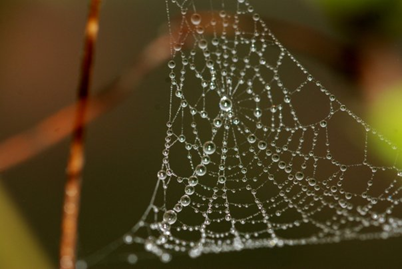
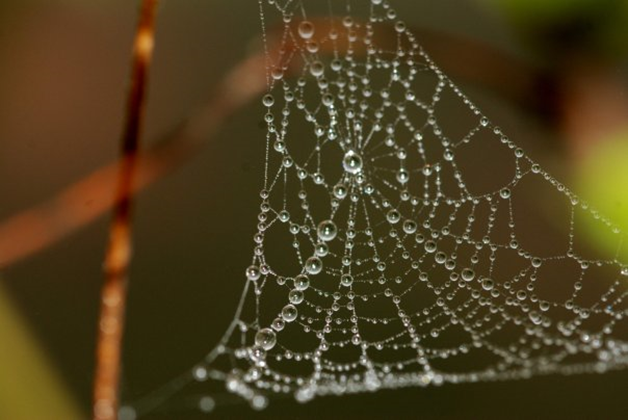
The randomness has a pattern, the chaos has a centre, when you connect the dots, it all becomes apparent. Bandipur, Karnataka, India
As a result, I became increasingly withdrawn and hesitant when I couldn’t play the game whose rules I couldn’t understand. I wondered how I would ever find my feet in this chaotic world.
All this started to change when I took up photography in my late teens. I started to observe and pause the world around me, and a gradual slowing down took place. I revealed in that pause each time I composed a picture; that elusive moment when feelings flit across a person’s face or when nature was coming together to make a dramatic statement.
I began to witness a fleeting predictability; but predictability, nonetheless. Subtle patterns started to appear when previously there were none. The rules that had eluded me starting to emerge seamlessly and I started seeing a method to the madness of the world.
It is in these moments that I started to find grounding, ’nowness’, an anchoring to my days which led me deeper into myself, and into deeper connectedness with the world around me.
In moments of chaos and anxiety, I sought out my lens to provide grounding and answers; photography became my world behind a world.
What do people do all day?
Transactional Analysis (TA), a method of psychotherapy developed by Eric Berne, includes a popular piece of theory known as ‘Time Structuring’. It explains that people typically spend their time in six ways: Withdrawal, Rituals, Pastimes, Activities, Games and Intimacy; a phenomenon which I started to notice was reflected in nature too.
Withdrawal
When a person withdraws, they don’t interact with anybody. They are physically there but lost in an inner world of their own making, like a turtle withdrawing into its shell. It’s hard to tell what they’re thinking or feeling or imagining.
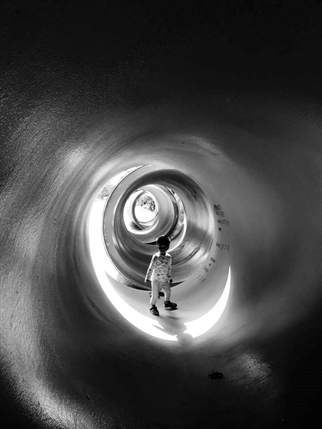
I’ll stay here a while, deep within the depths, in this little space I call my own. Bangalore, India
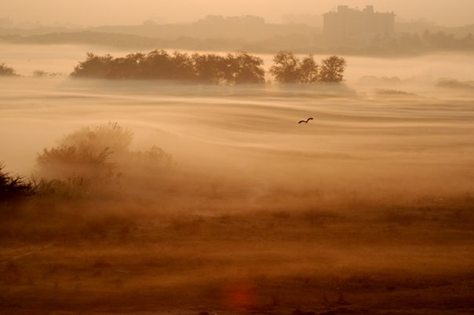
In the vastness of this world, I withdraw into myself and fly all alone. Bangalore, India
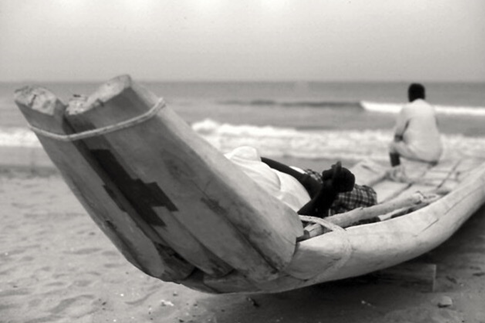
The tide and sky is all I need when I choose my own company… Marina Beach. Chennai, India
Rituals: Resting in the familiar
A ritual is a series of actions that follow a prescribed order. When the world feels unfamiliar, we cosy into the comfort of familiar rituals and surrender to their predictability.
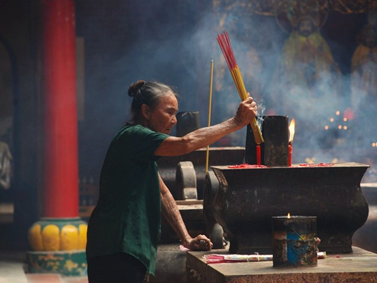
In lighting the incense, she finds an anchor to her day. Lady in a Chinese Temple, Saigon, Vietnam

Each day, we do the dance of familiarity; I close my eyes and revel in its monotony. Kecak Dance, Bali, Indonesia
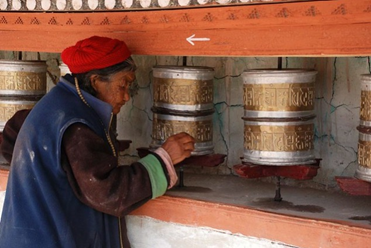
‘Om Mani Padme Hum’ – the syllables that convey the whole truth of life, about suffering, and how one can liberate oneself from the suffering. Ladakh, India
The rituals of our childhood comfort us even as we rush into adulthood: how to greet, when to smile, how to say sorry and thank you. To some, the days are marked by rituals of survival, like this young girl who has to take her sheep grazing, even in the bitter cold of the winters.
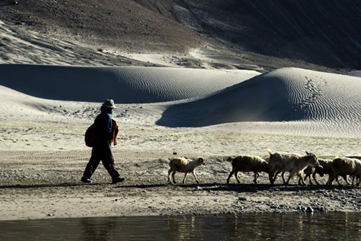
Winter Shepherdess. Nubra Valley, Ladakh, India
Pastimes: It’s important to talk of the weather…
A pastime, like ritual, proceeds in a familiar way, but without a material outcome.
Conversations that lead nowhere, light-hearted banter that ends up in no lofty goal, a pastime is just that – a way to pass time and avoid the weightier concerns of the here and now.
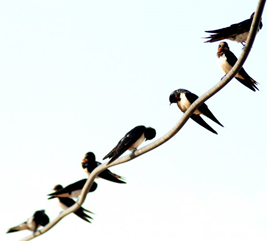
‘How’s the weather?’ she asks. ‘Didn’t you ask me this yesterday?’ he replies. ‘I guess so’, she says, and they both fly away. Bangalore, India
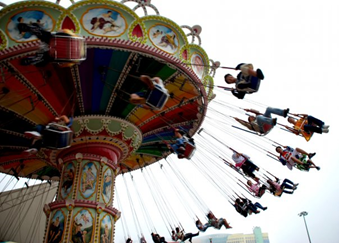
Going around in circles, but nowhere important to go. Sometimes we move forwards and sometimes back, we go wherever the ride takes us. Who doesn’t enjoy a good pastime? Genting, Malaysia

Each day we meet and talk about the weather, and then the state of the world. We come back the next day and do it all over again…Karinji Lake, Mysore, India
Activities: The day isn’t done till my job is done
People directing their energy to a material outcome. All around us are people going about in a mad rush to get to work; the bees are abuzz serving their queen, the weaver must make the cloth, the fisherman must make his catch; till then, the day is not done, and we must not close our eyes.
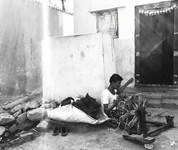
Sunset Weaver. Hospet, Karnataka, India

The silkworm has paid its due, Its job is done. My child calls me home; I await the setting of the sun. Karnataka, India
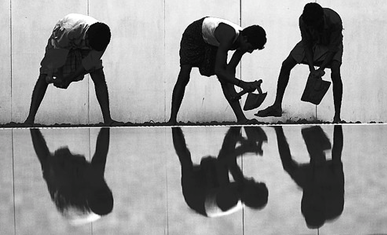
Twice as hard, but once the pay, my limbs are weary, my days are gray… Bangalore, India
Games
Games are a series of familiar, repititive interactions between two people, a replay of childhood strategies…
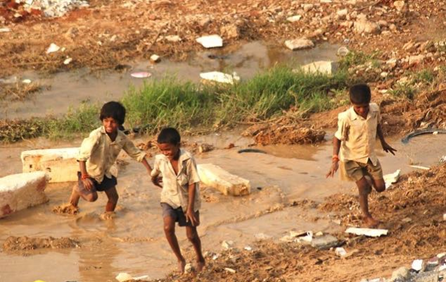
You be the police, I’ll be the robber; I’ll hop, you follow, then we’ll play a game of tic tac toe, but when it’s time to go home, there will be tears and sorrow.Bangalore, India

These games we play, the give and take. It’s not real, it’s just for play. Nagarhole National Park, Karnataka
Intimacy
When we reveal ourselves to each other, with all the raw authenticity of our human experience, we are being intimate. We don’t exchange secret messages, but lay each other bare for the other person to see, feel, behold.
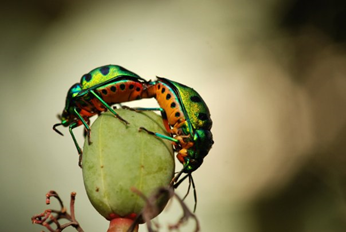
No space for secrets, no time for games…Mysore, India
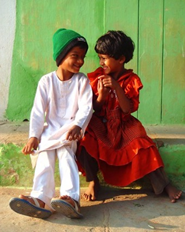
Remember the time we laughed, cried and fought, but it didn’t change a thing between us? Golconda, Hyderabad, India
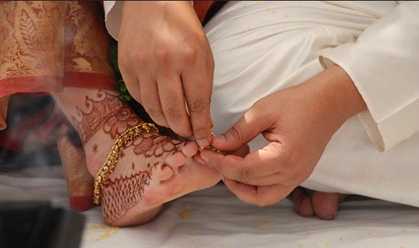
Let’s quit the games, the play and the pretence; let’s sit across and look into the mirrors of our souls…Hyderabad, India










No Comments
Leave a comment Cancel